Auteur: Robert C. van de Graaf MD

  • A Functional Metaphor for Understanding Techniques and Transformation in Behavioural Coaching

    J Health Behav Med Hist 2025-10.

    A Functional Metaphor for Understanding Techniques and Transformation in Behavioural Coaching

    Robert C. van de Graaf, MD, director
    MEDTCC Institute for Health, Behaviour, Medicine and its History, The Netherlands

    Abstract

    Coaching is often perceived as a supportive conversation, but in its essence, it is a precise behavioural intervention. This article introduces the metaphor of surgery as a conceptual tool to distinguish two categories of coaching techniques: intervention techniques (ITs) and behavioural change techniques (GVTs). Drawing on parallels with surgical practice, the article reframes coaching as a professional act that requires preparation, precise technique, bodily skill, and constant monitoring, assessment and decision making. This surgical metaphor clarifies the nature of coaching and helps improve its identity as an intentional, embodied, and transformative practice.

    Introduction

    Coaching is frequently described as a dialogue, a supportive encounter, or a safe space for reflection. Yet such descriptions, while partially true, risk obscuring the essential nature of coaching: an active, structured intervention in human behaviour.

    Much like surgery, coaching aims to change something within a living system. It involves preparation, precision, timing, tools, and technique. The coach, like the surgeon, is not merely present—they intervene. They act. The purpose of this article is to offer a metaphorical but functionally accurate reframe: that coaching is more like surgery than many professionals and clients currently perceive. This metaphor is not a decorative analogy, but a diagnostic lens. It clarifies the logic behind coaching techniques, the skill involved in using them, and the need to distinguish between two critical dimensions of professional practice: the conditions for change and the mechanisms of change itself.

    Why a Surgical Metaphor?

     Professional metaphors shape practice. They provide practitioners with mental models that guide attention, language, and skill development. In medicine, surgery stands as a clear example of professional precision: a structured act upon a living body, with real consequences and high stakes.

    Coaching, by contrast, often borrows metaphors from talking, teaching, or parenting. While these may highlight the relational side of coaching, they fail to capture its technical depth. A surgical metaphor reclaims this depth. It reminds us that coaching is not merely about listening—it is about knowing when and how to act.

    In both coaching and surgery, the practitioner must understand:

    • What system they are working in.
    • What change is desired.
    • What techniques are available.
    • What conditions must be established for the intervention to succeed.

    Surgery and coaching both operate in high-stakes, adaptive systems. And in both, timing, preparation, and skill make the difference between healing and harm.

    Techniques in Two Domains: ITs and BCTs vs. ITs and TCTs

    One of the most clarifying insights offered by the surgical metaphor is the distinction between two categories of techniques:

    1. Intervention Techniques (ITs)

    These are techniques that create the conditions for change.
    In surgery, examples include anesthesia, patient positioning, sterility, hemostasis, and real-time monitoring.
    In coaching, these include building trust, creating psychological safety, offering structure, regulating attention, and providing containment.

    These techniques do not directly alter tissue or behaviour, but they are essential for preparing the system for change. Without skilled application of ITs, any attempt at transformation risks failure, resistance, or harm.

    2. Change Techniques

    These are techniques that directly initiate change in the system.

    In coaching, we refer to these as Behaviour Change Techniques (BCTs). These include: goal setting, behavioural action planning, prompting self-monitoring, providing task-specific feedback and stimulus control (cue management).

    In surgery, the analogous category could be called Tissue Change Techniques (TCTs). These include: incision, dissection, excision, suturing and grafting.

    These techniques are the tools of transformation. They are specific, targeted, and often irreversible. Their effectiveness depends entirely on the readiness of the system — and on the quality of the preceding intervention techniques.

    Table: Coaching and Surgery Compared

    CoachSurgeon
    BCTs: e.g., goal setting, action planning, feedbackTCTs: e.g., incision, suturing, dissection
    ITs: e.g., trust-building, structure, containmentITs: e.g., anesthesia, positioning, monitoring
    Primary instrument: body, presencePrimary instrument: hands, eyes, attention
    Secondary tools: camera, screenSecondary tools: scalpel, clamp, optics

    Coaching Is Not a Conversation

    It is a carefully structured intervention in a dynamic behavioural system. The body, emotions, memory, motivation, and environment are all part of that system. Coaching aims not just to talk about them—but to work within them.

    Like surgery, coaching requires:

    • Preparation: Who is this person? What system are we entering? What is the indication for intervention?
    • Positioning: What is the first step? How do we gain access without harm?
    • Technique: What intervention is appropriate? How do we ensure safety?
    • Monitoring: What reactions emerge? What must we adjust?
    • Closure and recovery: How do we stabilize the change? What follow-up is needed?

    Monitoring and Recovery: Coaching as a Live Procedure

    Neither coaching nor surgery ends with the application of a technique. Both demand real-time monitoring and adaptive responsiveness. The human system — behavioural or biological — is not static. It reacts. It compensates. It protests. And it sometimes destabilizes.

    In surgery, an unexpected bleeding or a shift in blood pressure prompts immediate action. Monitoring isn’t a formality — it’s a safeguard. In coaching, the same principle applies. Coaches must track verbal and non-verbal cues: shifts in affect, changes in tone, hesitation, resistance, or confusion. These are the system’s vital signs.

    If the behavioural “field” becomes unsafe — if the client feels overwhelmed, confused, or exposed — the coach intervenes not with a new BCT, but with a renewed intervention technique: slowing down, re-establishing safety, offering containment.

    After the core intervention, closure matters. Just as a surgeon does not walk away from an open wound, a coach does not exit abruptly from a deep behavioural shift. Reflection, consolidation, and preparation for integration are essential. Without this recovery phase, even the best-applied technique can collapse under real-world stress.

    The Coach as Instrument: Body, Presence, and Perception

    In both coaching and surgery, the practitioner’s own body is the primary tool. Precision, attunement, and timing are not purely cognitive functions — they are sensorimotor and relational.

    The surgeon’s eyes, hands, and fine motor control are honed through repetition, presence, and bodily intelligence. Likewise, the coach’s tone of voice, posture, facial expression, and gaze communicate far more than content. They co-regulate the system. They modulate readiness.

    Coaching is not performed through the body. It is performed with the body. This insight has major implications for training: technique manuals and scripts are not enough. Coaches must train their instrument — not only in theory, but in breath, voice, stillness, and presence.

    Technology plays a supporting role. Just as a surgeon may use scalpels, scopes, or robotic arms, coaches may use video calls, reflective forms, or digital tools. But these are always secondary instruments. The primacy of the human instrument — attuned, grounded, and disciplined — remains.

    Clinical Implications: Training, Supervision, and Research

    The surgical metaphor offers multiple practical benefits for the field of coaching, particularly in advancing its professional maturity and technical precision.

    1. Terminological Precision

    Many coaching approaches blur the boundaries between supportive conversation, motivational dialogue, and structured behavioural intervention. By applying the surgical metaphor, we can promote a clear and functional taxonomy of techniques:

    • Intervention Techniques (ITs) create the necessary conditions for change — safety, containment, structure.
    • Behaviour Change Techniques (BCTs) are the instruments of transformation — planning, goal setting, feedback, and stimulus control.

    This clarity enhances communication, consistency, and training within the profession.

    2. Professional Identity

    Reframing coaching as a deliberate behavioural intervention sharpens the coach’s professional self-image. Coaches are not passive listeners or informal helpers — they are skilled behavioural professionals who perform live procedures with measurable effects. Just as surgeons act with intention and precision, so too must coaches, applying their tools with care, timing, and attunement.

    3. Structured Training and Supervision

    Surgical education is based on rigorous structure: simulation, stepwise protocols, tactile skill development, reflection on errors, and supervised practice. Coaching can follow suit by:

    • Training coaches in recognising and applying ITs before any BCT is attempted.
    • Practising how to establish a “sterile field” — a psychologically safe and attuned environment.
    • Teaching coaches when to pause, how to contain distress (emotional “bleeding”), and how to close a session with clarity and integration.
    • Supervision and teaching can include reviewing the sequence and timing of interventions — much like a surgical team would review a procedure.

    4. Research and Evidence-Based Development

    Inspired by surgical science, coaching can benefit from a stronger empirical foundation. Future research directions include:

    • Sequencing Logic: What are the most effective sequences and combinations of ITs and BCTs for specific behavioural goals? Are there universally effective “intervention paths” for common issues such as habit change, burnout recovery, or motivation loss?
    • Checklists and Protocols: Can coaching benefit from procedure-style checklists, improving reliability without losing nuance?
    • Adaptive Monitoring: How can real-time emotional and behavioural “vital signs” guide in-session decisions?
    • Instrument Calibration: How do coaches develop, train, and refine their primary instrument — their body, presence, and perception? What is the effect of coach regulation on client outcomes?
    • Indications and Contraindications: When is a particular BCT (e.g., goal-setting) helpful — and when might it backfire? Just as surgeons consider comorbidities and tissue readiness, coaches can consider motivational states, readiness to change, or cognitive overload before intervening.
    • Precision Coaching: Just as surgery moved from broad excisions to minimally invasive and robot-assisted techniques, can coaching evolve toward more precise, individualized intervention strategies, using data, pattern recognition, and reflective practice?
    • Intervention Efficacy Across Populations: Are some IT–BCT combinations more effective for specific populations (e.g., trauma survivors, adolescents, executives)? What role do cultural, psychological, or neurobiological differences play?

    By learning from the surgical discipline — its language, structure, and commitment to continuous improvement — coaching can evolve into a behavioural profession of comparable clarity and respect. The surgical metaphor is not a claim of superiority, but a call to precision. It reframes coaching as a deliberate act of change, grounded in preparation, technique, monitoring, and care.

    Discussion

    The metaphor of surgery as applied to coaching is not a claim of equivalence — it is a conceptual tool. Coaching is not medical, and its “patients” are not anesthetized. The coaching relationship is collaborative, co-regulated, and conscious. But even in this difference lies the power of the comparison.

    Surgery is serious. Structured. Technical. It is done with preparation, skill, and care. By invoking the metaphor, we assert that coaching too deserves this degree of seriousness — not solemnity, but precision. Not rigidity, but intentionality.

    Just as surgical teams operate with clarity about roles, steps, and risks, coaching professionals can adopt similar clarity about techniques, timing, and responsibility.

    Of course, metaphors are simplifications. Not all coaching requires deep intervention. Some sessions may resemble diagnostics, maintenance, or light touch. Not every coach wants or needs to adopt this framing.

    However, for coaches working with deep change — in trauma, addiction, leadership, health behaviour, or burnout — this metaphor offers both a lens and a language: coaching as a behavioural procedure, not just a reflective practice.

    Conclusion

    Coaching is not a conversation. It is a live, technical intervention in a dynamic behavioural system. Like surgery, it requires preparation, intervention techniques to create safe conditions, behavioural change techniques to enact the shift, and skillful monitoring to support integration and recovery.

    By adopting the surgical metaphor, coaches can clarify their professional craft, distinguish their techniques, and train with greater intentionality. The body becomes an instrument, the technique a skill, and the process a procedure. This reframing elevates coaching from informal support to structured transformation.

    In a world increasingly overwhelmed by superficial change and quick fixes, coaching with surgical precision offers an alternative: deliberate, embodied, accountable change work — with care at its core.

  • The Zoo in Our Brain: An Evolutionary Psychology Framework for Understanding and Coaching Human Behaviour

    J Health Behav Med Hist 2025-9.

    The Zoo in Our Brain: An Evolutionary Psychology Framework for Understanding and Coaching Human Behaviour

    Robert C. van de Graaf, MD, director

    MEDTCC Institute for Health, Behaviour, Medicine and its History, The Netherlands.

    Abstract
    Human behaviour is shaped by evolved psychological mechanisms that once served adaptive purposes in ancestral environments. In clinical and coaching contexts, clients often struggle with behavioural patterns – such as avoidance, conformity, rigidity, restlessness, and meaninglessness – that can be traced to these ancient instincts. This article introduces the “Zoo in Our Brain Model”, a metaphorical but scientifically grounded framework comprising five core behavioural drives: the Comfort Seeker, the Belonger, the Creature of Habit, the Explorer, and the Meaning Maker. Each drive is linked to specific evolutionary functions, psychological modules, and modern mismatches. The model offers clinicians and coaches a practical, non-pathologizing lens for understanding and guiding clients through behavioural change.

    Introduction

    Contemporary clinical and coaching practices often aim to help individuals change behaviour that is perceived as irrational, self-sabotaging, or “stuck.” However, from an evolutionary psychology perspective, such behaviour is rarely irrational. It is typically the product of evolved psychological adaptations that once served survival or reproductive goals in ancestral environments.

    This raises a crucial question: if our brains are wired by evolution, how can we better understand – and coach – the behaviours they generate? One powerful answer lies in the use of accessible metaphors that bridge the gap between deep scientific theory and lived, emotional experience. Metaphors help illuminate the inner landscape, offering practitioners and clients a shared language for conflict, regulation, and transformation.

    One widely known metaphor is the Triune Brain Theory, originally proposed by neuroscientist Paul D. MacLean (1913–2007). It conceptualizes the human brain as having evolved in three major layers:

    • The Reptilian Complex or Reptilian Brain (basal ganglia): responsible for instinctual survival behaviours like fight, flight, and freeze.
    • The Paleomammalian (Limbic) Brain: associated with emotions, bonding, and social behaviour.
    • The Neomammalian Brain (neocortex): enabling reasoning, planning, language, and abstract thought.

    Although contemporary neuroscience regards this model as an oversimplification, it continues to function as a potent metaphor in behavioural coaching. It mirrors how clients often experience internal tension – between primal urges, emotional reactions, and thoughtful intentions.

    Another influential framework for understanding human behaviour is the Dual-Process Model of cognition, often represented metaphorically as the Rider and the Horse or the Rider and the Elephant. Unlike the triune brain, which traces the evolutionary layering of brain structures, the dual-process model distinguishes between two systems of thinking: a fast, automatic, subconscious, emotional system and a slow, deliberate, rational system. This distinction has deep roots in philosophical thought.

    In Plato’s Phaedrus, the soul is described as a charioteer trying to steer two horses – one noble, one unruly – symbolizing the struggle between reason and desire. In modern psychology, Daniel Kahneman (1934–2024) describes these systems as System 1 (fast, instinctive, emotional) and System 2 (slow, rational, effortful). Jonathan Haidt further popularized the metaphor of a rider atop an elephant, where the rider represents rational control and the elephant symbolizes powerful emotional and habitual drives.

    In clinical and coaching contexts, these metaphors illustrate why sheer willpower or insight is often insufficient for lasting behavioural change. Sustainable transformation requires engaging the “horse” – the deeper, embodied parts of our minds – through emotional alignment, repetition, environmental design, and compassionate reinforcement.

    Evolutionary psychology provides a theoretical foundation for these metaphors. It posits that the human mind consists of domain-specific psychological mechanisms – often referred to as “mental modules” – that evolved to solve recurrent challenges of survival and reproduction in ancestral environments. These mechanisms are not general-purpose problem-solvers but functionally specialized systems designed to detect and respond to specific types of environmental input: threats, social cues, status hierarchies, food sources, mating opportunities, and more. These systems operate largely outside of conscious awareness and are optimized for the ecological and social conditions of prehistoric life.

    However, our modern environment differs radically from that ancestral world. We now live in urbanized, digitized, and socially fragmented societies – environments our brains did not evolve to navigate. This mismatch leads to what scholars call evolutionary mismatch: traits or behaviours that were once adaptive but become maladaptive when expressed in a novel or artificial context. Examples include the craving for high-calorie foods (adaptive in scarcity, harmful in abundance) or hypervigilance in low-threat environments (contributing to anxiety disorders).

    Many common psychological and behavioural challenges – such as procrastination, burnout, perfectionism, or addiction – can be reframed not as flaws or disorders, but as overextensions, undernourishments, or misfirings of evolved drives. Clients may not be broken; they may be mismatched.

    Building on this metaphorical and evolutionary psychological foundation, I developed the Zoo in Our Brain Model through years of clinical work and real-world observation. This model emerged organically from hundreds of conversations with patients, clients, and professionals. Drawing on my background as a medical doctor specialized in addictions, behaviour change, evolutionary psychology, and metaphorical thinking, I began to notice recurring internal dynamics – voices, loops, emotional needs – that clustered into five recognizable behavioural drives. These “animals” were not invented, but discovered: shaped by the language, narratives, emotional and behavioural patterns of people trying to understand themselves.

    The Zoo in Our Brain Model introduces a metaphorical inner ecosystem of five animal-like drives, each reflecting an evolutionary pressure and deep psychological need that continues to shape our behaviour:

    • The Comfort Seeker aligns with primal avoidance and reward systems.
    • The Belonger and Creature of Habit reflect mammalian circuits for social bonding and routine.
    • The Explorer and Meaning Maker represent uniquely human capacities for curiosity, learning, abstraction, autonomy, and purpose.

    Together, these five drives form a practical, intuitive map of inner life – one that enables practitioners to frame behaviour in an integrated and non-pathologizing way. The model honours both our ancient instincts and our modern aspirations.

    By helping clients identify which drives are overactive, underfed, or in conflict, the Zoo in Our Brain Model offers clinicians and coaches a nuanced tool for behavioural insight and change. Rather than fighting or suppressing these drives, the goal is to understand, engage, and guide them – turning inner chaos into inner ecology.

    1. The Comfort Seeker

    This drive represents our most primal survival instinct, rooted in ancient reptilian brain structures like the brainstem and basal ganglia. It is neurochemically governed by systems that prioritise dopamine (seeking and reward), endorphins (relief and pleasure), and GABA (inhibition and calm). Its core logic is simple yet powerful: avoid harm, conserve energy, and seek immediate comfort.

    From an evolutionary standpoint, the Comfort Seeker was critical in hostile environments marked by scarcity, pain, and unpredictability. Retreating into warmth, stillness, or food wasn’t indulgence – it was self-preservation. Today, however, in environments overflowing with ultra-accessible comforts – junk food, digital stimulation, alcohol, pills – this ancient system is easily hijacked. What was once adaptive now often fuels avoidance loops and overconsumption.

    Behavioural psychology teaches us that all behaviour, at the moment it occurs, is perceived (consciously or unconsciously) to have more benefits than costs. Even maladaptive behaviours make sense in their original context. The Comfort Seeker is thus not merely one of five drives – it is the bedrock. It colours and supports all others: making habits feel soothing, belonging feel safe, novelty rewarding, and meaning emotionally stabilising.

    Clinical example: A client reports chronic binge eating in the evening. Upon exploration, food has become her primary form of emotional regulation. Coaching validates the Comfort Seeker’s protective logic while introducing alternative soothing rituals – such as breathwork, body-based self-care, or gentle journaling – allowing her to shift behaviour without shame.

    2. The Belonger

    The Belonger archetype reflects our deeply rooted mammalian need for attachment, acceptance, and relational safety. It is neurobiologically anchored in the limbic system, anterior cingulate cortex, and oxytocinergic and serotonergic systems, which help us bond, attune, and track social approval.

    Evolutionarily, survival depended not on rugged individualism but on group inclusion. Belonging to a tribe offered protection, food sharing, and access to reproduction. Social rejection, by contrast, meant danger. Our brains evolved to monitor social cues with high sensitivity, prompting us to behave in ways that maintain group harmony.

    Today, the Belonger still motivates connection and collaboration – but it can clash with assertiveness, boundary-setting, or authenticity in modern social systems. It may drive people-pleasing or conflict avoidance not out of weakness, but from a neuro-evolutionary mandate: stay safely connected.

    Clinical example: A young professional hesitates to provide critical feedback at work. Her Belonger fears exclusion or being seen as “difficult.” Coaching helps her understand this instinct and develop strategies for speaking up while preserving relational safety.

    3. The Creature of Habit

    This archetype embodies the brain’s capacity to automate behaviour through repetition and reward. It is grounded in subcortical structures – especially the basal ganglia (notably the dorsal striatum), the limbic system, and midbrain dopamine loops – that encode habit formation and procedural memory.

    In ancient environments, forming predictable routines – like where to find water or how to prepare food – freed up mental energy for novel or dangerous challenges. Habits became stabilising anchors in a volatile world. Today, the same system helps us brush teeth or drive without thinking – but also keeps us locked into less adaptive routines like drinking wine after work or doom-scrolling during stress.

    Habits are notoriously resistant to change, not because of laziness, but because they reside in implicit memory systems that are stronger than conscious intention. Effective behavioural change must therefore engage the brain’s habit loops, not just its rational centres.

    Clinical example: A man smokes after every meal, despite wanting to quit. Coaching focuses on dissecting the habit loop (cue–routine–reward), and gradually building a competing routine (e.g. post-meal walk or chewing gum) that reconditions the loop without triggering threat signals.

    4. The Explorer

    The Explorer represents our innate drive for curiosity, novelty, and autonomous exploration. It is orchestrated by cortical regions like the prefrontal cortex and hippocampus, and modulated by dopamine networks that reward uncertainty, discovery, and mastery.

    Evolutionarily, exploration increased adaptive fitness. Individuals who ventured beyond the familiar – seeking new tools, foods, and alliances – often found survival advantages. This drive helped humans innovate, expand territories, and transmit knowledge across generations.

    In modern life, the Explorer fuels creativity, learning, and personal growth. But when stifled by rigid routines or social pressures, it may express itself as boredom, apathy, or even burnout. When over-activated, it can drive impulsivity or chronic distraction.

    Clinical example: A successful woman describes restlessness and disengagement at work. Her days feel monotonous. Coaching reveals an underfed Explorer. Together, they design intellectually stimulating side projects and introduce novelty into her professional routine, reigniting her intrinsic motivation.

    5. The Meaning Maker

    This archetype reflects our symbolic and future-oriented brain. It integrates memories, values, and imagined futures into a coherent identity and purpose. It relies on networks including the default mode network, prefrontal cortex, and limbic system to create narratives that guide behaviour and imbue it with emotional significance.

    From an evolutionary standpoint, meaning-making allowed humans to build moral codes, share stories, and organise around shared goals. This capacity supported cooperation, cultural survival, and resilience in hardship. Meaning isn’t just philosophical – it’s neurobiological.

    When the Meaning Maker is offline, people may feel lost, burnt out, or empty. When active, it supports long-term thinking, coherence, and vitality. Coaching or therapy that reconnects people to their “why” can dramatically enhance motivation and emotional alignment.

    Clinical example: A burned-out physician feels numb and disengaged after years of overwork. Coaching helps him revisit his core values and professional mission. As purpose reawakens, so does his sense of agency and energy.

    Integration: A System of Interacting Drives

    These five archetypes are not isolated systems. They function as a dynamic behavioural ecology. Each has strengths and vulnerabilities. When well-balanced, they create a foundation for vitality, resilience, and behavioural flexibility. When misaligned, they can pull us in conflicting directions—or keep us stuck in loops of suffering or stagnation.

    Case Example – Aligned Drives

    A mid-career educator thrives professionally and personally. She has comforting daily rituals (Comfort Seeker), strong professional relationships (Belonger), healthy routines (Creature of Habit), creative side projects (Explorer), and a clear sense of mission (Meaning Maker). Coaching focuses on maintaining this integration during life transitions, ensuring continued alignment across domains.

    Case Example – Misaligned Drives

    A tech worker reports anxiety, procrastination, and emptiness. He compulsively scrolls (Comfort Seeker), avoids conflict with coworkers (Belonger), clings to outdated routines (Creature of Habit), and feels creatively stifled (Explorer), with no clear sense of why he’s doing the work (Meaning Maker). Coaching helps untangle these imbalances, starting with stabilising routines and reconnecting with purpose.

    Clinical Application: Coaching with the Zoo in Our Brain

    Understanding the five evolutionary drives is just the beginning. The real strength of The Zoo in Our Brain model lies in its application: as a diagnostic lens, a coaching compass, and a shared language for behavioural change. Rather than offering a fixed typology or one-size-fits-all theory, the model functions as a dynamic map – helping coaches and clinicians explore which drives are overactive, undernourished, or in conflict, and how to restore functional balance.

    By externalizing behaviour as the work of distinct yet interconnected inner “animals,” the model fosters self-compassion, insight, and personalized transformation. What follows are practical ways to use the framework in everyday coaching and therapeutic work.

    Intake and Assessment

    At the start of the process, practitioners can use the model to explore how each drive is currently expressed. A simple intake form, reflection tool, or set of metaphor cards invites clients to identify which “inner animals” feel dominant, neglected, or conflicted.

    Example: A coach offers a worksheet with five illustrated animal archetypes and reflection prompts. Clients rate each archetype’s current influence and desired strength. This opens a non-pathologizing dialogue about imbalance – not failure.

    Psychoeducation

    Many clients feel shame around behaviours they struggle to change. The Zoo model reframes these patterns as evolutionarily wired and deeply human – offering a narrative grounded in biology and compassion. Rather than diagnosing dysfunction, it teaches adaptation.

    Example: A client addicted to social media learns about the Comfort Seeker’s craving for relief, the Belonger’s need for approval, and the Habit Creature’s automated loops. Understanding how these systems evolved softens self-judgment and unlocks new behavioural options.

    Behavioural Mapping

    Clients can map a typical day through the lens of the five drives. Using colours, symbols, or timelines, they visualize which drives are active when – and what triggers them. This often reveals behavioural loops, unmet needs, or blind spots.

    Example: A client who snacks excessively at night maps her stress patterns. The exercise reveals that work-related pressure suppresses her Explorer and Meaning Maker, activating the Comfort Seeker by evening. Coaching focuses on reintroducing novelty and purpose earlier in the day.

    Tailored Interventions

    The model encourages redirection – not suppression – of drives. Practitioners help clients develop micro-goals that nourish underused drives while gently tempering overactive ones. Each drive has its own behavioural “diet”:

    • Comfort Seeker → Healthy soothing (e.g., warm baths, nature walks, deep breathing)
    • Belonger → Authentic connection (e.g., group rituals, vulnerable conversation, support systems)
    • Creature of Habit → Intentional habit design (e.g., habit stacking, environmental cues)
    • Explorer → Novelty and play (e.g., side projects, curiosity journaling, creative expression)
    • Meaning Maker → Purpose and coherence (e.g., values clarification, legacy planning, narrative work)

    Example: A mid-career professional feels emotionally drained and stuck. With her coach, she builds a plan: weekly painting sessions (Explorer), journaling on personal values (Meaning Maker), and restructuring morning routines (Creature of Habit). The aim is not just change – but harmony.

    Inner Visualization

    Clients may be guided through a visualization in which they imagine the five animals in a room. Which one is pacing? Which one is sleeping? Which needs space, or has taken over? This intuitive exercise can surface emotional truths that words may miss.

    Working with Imbalance

    Each drive exists on a spectrum. When one is overactive – or another neglected – psychological distress often follows. For example, a neglected Meaning Maker can lead to burnout, while an overactive Comfort Seeker may cause chronic avoidance. The goal is dynamic balance, not suppression.

    Reframe: Drives are not enemies. They are energies – each with evolutionary logic and potential. Coaching helps clients learn to listen to, respect, and rebalance them.

    Goal Alignment and Motivation

    The model enhances goal-setting by aligning it with the client’s unique behavioural blueprint. Instead of generic goals like “be healthier” or “be more focused,” clients set goals that reflect their dominant and neglected drives – leading to deeper engagement and longer-lasting change.

    Cultural Sensitivity

    While biologically grounded, each drive is shaped by cultural norms. The Belonger, for instance, may express differently in collectivist versus individualist cultures. Practitioners are encouraged to explore how culture, community, and identity influence drive expression.

    Group Coaching and Teams

    The model also works powerfully in group settings. Participants often recognize their own drives mirrored in others. Group exercises – like drawing, storytelling, or role-play – can create insight, laughter, and connection. Teams can reflect on collective imbalances (e.g., too much Habit Creature, not enough Explorer) and co-create healthier dynamics.

    In Summary: Working With the Zoo

    The Zoo in Our Brain is not just a model – it’s a mindset. It helps practitioners move beyond surface-level change into a deeper, more integrated understanding of human behaviour. By mapping action to biology, emotion, and meaning, it reduces resistance and enhances sustainable transformation.

    Rather than taming or silencing the inner zoo, we teach clients to become wise caretakers – listening to, feeding, and rebalancing each drive with clarity and care.

    Discussion

    The Zoo in Our Brain model offers a metaphorical yet biologically informed framework for understanding human behaviour through the lens of evolution. Its central strength lies in its integrative capacity: it brings together insights from evolutionary psychology, behavioural science, coaching practice, and neuroscience-informed metaphor. By translating complex internal processes into accessible archetypes, it provides practitioners and clients with a shared language for self-awareness, behavioural insight, and change.

    Unlike categorical diagnostic models, this approach reframes problematic behaviour not as pathology, but as a possible overactivation, undernourishment, or misalignment of evolved behavioural drives. This non-pathologizing stance aligns well with contemporary coaching ethics and trauma-informed care: it invites curiosity, compassion, and restoration, rather than blame or suppression.

    The model also fits within a growing recognition of “mismatch theory” in psychology – the idea that many modern challenges arise not from individual weakness, but from an environment that no longer fits our evolved needs. In that sense, the Zoo model serves not just as an internal map, but also as a lens for understanding societal patterns like digital overconsumption, workplace disengagement, or chronic stress.

    However, the model does have limitations. First, its use of metaphor—though powerful—necessarily simplifies the underlying complexity of neural systems and individual variation. Drives do not always map neatly onto specific brain regions or neurotransmitter systems. Second, while the five drives capture broad patterns, they may not fully represent the rich diversity of human motivation, especially as shaped by trauma, neurodivergence, or sociocultural contexts. Third, empirical validation is still needed: future research could investigate how the use of this model affects client outcomes, therapeutic alliance, or coaching engagement.

    Nevertheless, these limitations do not diminish its practical value. The model is not intended as a replacement for detailed clinical assessment or neuroscientific analysis, but as a complementary tool—one that restores meaning, motivation, and metaphor to the centre of behavioural change work.

    Conclusion

    Human behaviour is not a puzzle of broken parts, but a reflection of millions of years of adaptation—sometimes elegant, sometimes outdated. The Zoo in Our Brain model reframes our inner landscape not as a battlefield between logic and impulse, but as an ecosystem of drives, each with evolutionary logic, emotional depth, and behavioural consequence.

    For coaches, clinicians, and clients alike, this model offers more than insight: it offers a practice. A way to listen more closely to what our discomforts, habits, longings, and resistances are trying to signal. A way to engage change not as control or correction, but as care – care for the parts of ourselves shaped by both past survival and future potential.

    In a time where human behaviour often seems fractured or stuck, the Zoo model reminds us that even our most frustrating patterns may be echoes of something once wise. When we understand the animals in our brain, we can begin not just to manage behaviour – but to guide it home.

  • Genealogical Therapy: A Structured Approach to Healing Through Ancestral Exploration

    J Health Behav Med Hist 2025-8.

    Genealogical Therapy: A Structured Approach to Healing Through Ancestral Exploration

    Robert C. van de Graaf, MD, director

    MEDTCC Institute for Health, Behaviour, Medicine and its History, The Netherlands.

    Introduction

    In recent years, genealogy has gained popularity as a hobby, a cultural practice, and a means of exploring personal identity. At the same time, psychotherapy has increasingly embraced narrative and systemic approaches that recognize the impact of intergenerational influences. Genealogical therapy bridges these domains by using structured genealogical research – such as ancestral charts, surname lines, and historical context – as a therapeutic tool. This method invites individuals to explore their family histories not only for factual knowledge, but for emotional healing, personal insight, and meaning-making.

    It also fosters meaningful dialogue between family members – parents, children, siblings  – as they reflect together on their shared ancestry and lineage. Genealogical therapy can be used in both individual sessions and family settings, including those involving biological relatives. Rather than sitting across from one another and replaying old relational dynamics, clients sit side by side, looking back together into the past. This shared gaze – beyond the well-known stories of parents and grandparents – can illuminate the “black hole” of earlier generations and offer a new lens for understanding and connection.

    Genealogical therapy emerged from personal experience and experimentation. While exploring my own family history, I became aware of the emotional and psychological impact of uncovering stories beyond the great-grandparent generation – what I began to call the “black hole” of family memory. This unexplored zone, often blank or vague in personal narratives, holds rich potential for identity formation, emotional insight, and intergenerational understanding.

    What began as personal inquiry gradually evolved into a structured method I now apply with others – both in individual work and in guided family conversations. The experience of sitting together, not in confrontation but in shared discovery, creates a different relational dynamic. The genealogical framework – names, charts, dates—acts as both map and catalyst. The result is not just biographical clarity, but emotional resonance, narrative integration, and psychological transformation.

    Methodological framework

    Genealogical therapy typically begins with the construction of a structured family map, such as an ancestral chart or a surname line. These tools serve as practical anchors: they help clients and families avoid becoming overwhelmed by the vastness of the past and allow for focused, meaningful exploration.

    Rather than attempting to reconstruct an entire lineage, the process often centers on a single point of focus. This may be an unknown ancestor, a recurring name, a particular village, or a life event – such as migration, war, or loss. Clients or families are invited to explore these focal points through both factual research (archival documents, civil records, oral history), contextual historical data and reflective dialogue.

    Emotional responses are not only expected but actively welcomed and explored. Alongside facts, patterns, silences, and unexpected discoveries are examined. Even small recoveries of the forgotten past can evoke a sense of connection, validation, or closure. In family settings, this shared inquiry often enhances empathy, reduces tension, and transforms judgment into curiosity.

    To consolidate and express the insights gained, creative outputs may be introduced – such as timeline posters, ancestral portraits, or short narrative snapshots. These formats bring abstract discoveries into tangible form and support ongoing reflection.

    The process often takes on the quality of structured, creative detective work. Therapist and client piece together fragments of identity and history, follow clues, revisit overlooked paths, and assemble coherent narratives from incomplete evidence. This investigative dimension makes genealogical therapy both cognitively stimulating and emotionally rewarding, inviting clients to rediscover not only where they come from – but also who they are becoming.

    Practical applications and variants of use

    Genealogical therapy lends itself to multiple flexible applications, depending on the needs, goals, and readiness of the client. Below are some of the most common forms of integration into practice:

    • Brief therapeutic prompts
      In regular sessions, a therapist might respond to a passing remark about a family name, an absent parent, or a buried secret by initiating genealogical inquiry. A simple question like “Do you know where your surname comes from?” or “Have you ever heard about your great-grandparents?” can open up meaningful conversations and emotional insight.
    • Client-led exploration
      Clients may be invited to start constructing their own ancestral chart, with the therapist offering templates, tools, or coaching along the way. This approach fosters ownership, reflection, and a growing sense of connection.
    • Therapist-led research
      With the client’s consent, the therapist may conduct genealogical research to map out basic family structures. In follow-up sessions, findings are shared, discussed, and emotionally explored together. Surprising discoveries often spark deeper insight or healing.
    • Thematic deep dives
      Some clients choose to focus on a specific theme – such as repeating names, shared professions, inherited losses, or historical migrations. These thematic threads can structure several sessions of inquiry and therapeutic dialogue.
    • Shared family exploration
      In family settings, members can work collaboratively to build a shared family tree, clarify missing links, and reflect on generational patterns. This collaborative work often transforms silence or blame into curiosity, conversation, and mutual understanding.
    • Creative and visual formats
      Genealogical content – whether created by clients or therapists—can be transformed into timelines, visual family trees, printed booklets, or digital stories. These tangible outputs help externalize inner dynamics and make complex histories accessible and discussable.

    Genealogical therapy is not a one-size-fits-all protocol, but a flexible repertoire of tools and approaches. What unites these applications is the structured use of genealogy as a gateway to emotional depth, identity exploration, and generational understanding.

    Applicability and Limitations

    Genealogical therapy has demonstrated broad applicability across diverse client populations and life circumstances. It resonates strongly with individuals seeking greater clarity around identity or existential grounding; with families confronting longstanding patterns of silence, conflict, or fragmentation; and with those coping with the psychological impact of migration, loss, or disconnection from cultural heritage. The method is also well-suited to transitional life phases – such as becoming a parent, grieving a loss, or preparing for retirement – when questions of legacy, belonging, and continuity often surface.

    However, genealogical therapy is not appropriate for acute psychiatric crises or situations where the disclosure of family trauma may destabilize fragile relationships. Nor is it intended to replace trauma-specific treatments such as EMDR or systemic trauma therapy. Instead, it offers a complementary perspective, helping clients place inherited patterns of pain or repetition within a broader historical and intergenerational framework. It does not aim to resolve trauma directly, but to help individuals understand where their agency begins in relation to what has come before.

    Nature and therapeutic mechanism

    Genealogical therapy does not stem from any single school of psychotherapy. Rather, it has evolved organically from clinical experience and reflective practice into a structured yet flexible method with demonstrable value. Its distinctive strength lies in the integration of factual genealogical investigation with emotional reflection and therapeutic dialogue. Clients are invited to explore their ancestral lines not merely as records, but as narrative frameworks that can illuminate personal meaning, resilience, and identity.

    This process is enriched through cultural and historical elaboration. While names, dates, and addresses provide structure, their emotional significance deepens when embedded in larger historical or cultural stories. Primary and secondary texts, family artifacts, local customs, works of art, or architecture can serve as emotional gateways – helping to animate the ancestral chart and connect individuals with a living cultural landscape. In this way, genealogical therapy becomes both a psychological inquiry and a historiographic exploration.

    By locating themselves within these unfolding lineages, clients often discover not only insights – but also unexpected sources of strength, perspective, and reconciliation.

    Positioning among related therapies

    Genealogical therapy intersects conceptually with several established therapeutic modalities, including family constellations (Hellinger), narrative therapy (White; Epston), contextual therapy (Boszormenyi-Nagy), transgenerational trauma theory (Kellermann; Schützenberger), and existential psychotherapy (Yalom). Yet its distinguishing feature lies in the interplay between the evidential and the emotional – between lived history and lived experience.

    • Unlike family constellations, which employ symbolic and spatial techniques to represent relational dynamics, genealogical therapy relies on concrete, verifiable information – names, dates, locations. This appeals to clients who prefer grounded, structured entry points into personal exploration and who may feel less comfortable with abstract or symbolic representations.
    • Compared to narrative therapy, which centers on re-authoring life stories through metaphor and language, genealogical therapy begins with real ancestral narratives. Rather than inventing new stories, it starts by discovering existing ones – then exploring how they can be reframed or reunderstood in the client’s present life context. This makes it particularly suited to those seeking coherence through continuity as well as reinterpretation.
    • In relation to contextual therapy, both approaches attend to intergenerational patterns, loyalty dynamics, and relational ethics. However, while contextual therapy emphasizes balancing relational “ledgers” and addressing invisible loyalties through clinical dialogue, genealogical therapy introduces historical scaffolding – such as ancestor tables or surname lines – to help externalize family narratives. These visual tools differ from genograms in their narrative and historical intent, functioning more as mirrors than maps.
    • Transgenerational trauma theory offers an important lens for understanding the echoes of inherited suffering. Yet genealogical therapy does not seek to process trauma in a clinical sense. Instead, it makes visible the long arcs of repetition, silence, and resilience—inviting clients to acknowledge what came before without being bound by it.
    • Finally, genealogical therapy shares existential therapy’s focus on meaning-making, mortality, and the search for coherence. But where existential therapy often begins in the abstract, genealogical therapy approaches these themes through a tangible lineage. Questions of origin, belonging, and legacy are no longer hypothetical—they become lived, traceable, and grounded in time, place, and human continuity.

    Training and Ethical Considerations

    For this method to be used effectively, practitioners must possess a dual competency. On the one hand, they should be skilled in core therapeutic abilities, with a solid understanding of psychopathology, trauma, and family systems. This ensures that they can assess client readiness, recognize psychological risks, and provide appropriate containment when needed. On the other hand, practitioners must also be versed in genealogical methodology—able to construct ancestral charts, conduct archival searches, and interpret historical context. An understanding of history is not a decorative add-on, but a necessary part of guiding clients through their familial past with nuance and integrity.

    Future research should examine outcomes of genealogical therapy, clarify its mechanisms of change, and develop formal training pathways for interested professionals. Ethical issues – such as the potential impact of revealing family secrets, questions of privacy, and navigating the tension between personal and collective narratives – also require careful consideration and scholarly attention.

    Conclusion

    Genealogical therapy offers a unique and structured pathway to psychological insight by anchoring personal exploration in the context of family history. Through the use of ancestral charts, historical research, and reflective dialogue, this approach transforms genealogical data into meaningful therapeutic material. By integrating emotional responses with verifiable lineage, genealogical therapy enables clients to make sense of the past in ways that promote healing, identity formation, and relational growth.

    Its versatility allows for application in brief interventions, long-term individual processes, or multi-generational family work. The method is not a replacement for trauma-focused or systemic therapies, but a complementary tool that can uncover new entry points for conversation and connection. Its strength lies in the balance between structure and creativity – between factual grounding and emotional resonance.

    As interest in ancestry and intergenerational meaning-making continues to grow, genealogical therapy stands at the intersection of psychology, history, and culture. It invites both clients and therapists to sit not in confrontation, but in shared discovery – to look back not simply to understand where we come from, but to reimagine who we are becoming.

  • The Pathophile Society.

    J Health Behav Med Hist 2025-7.

    The Pathophile Society.

    Robert C. van de Graaf, MD, director

    MEDTCC Institute for Health, Behaviour, Medicine and its History, The Netherlands.

    Adnan Mirza, director.

    Heartbeat Ventures, Utrecht, The Netherlands

    The Netherlands is making itself sick. That uncomfortable conclusion is central to the new report by the Council for Public Health & Society (RVS): Almost Everyone Sick (April 15, 2025). The Council describes how diagnoses are increasingly made more quickly and more broadly, often in response to mild complaints or even without a clear medical cause. The report identifies diagnosis expansion as a creeping societal problem. The free liver tests that were available last week at the RAI in Amsterdam illustrate what the Council means.

    As far as we are concerned, it touches on a deeper, more existential phenomenon. We see a society that has become structurally out of balance. People genuinely feel chronically unwell – physically, mentally, socially, or existentially. We live in a context that undermines health: unhealthy food, lack of physical activity, social isolation, work pressure, poverty of meaning, and excessive psychoactive consumption.

    The hunger for care is therefore not only cultural or psychological, but also a real reaction to a life that is becoming increasingly difficult to bear. Care has become one of the few socially accepted responses to this ongoing disruption.

    Care has to be about something. And so, collectively, we’ve become increasingly skilled at naming complaints, seeking diagnoses, and adopting the role of patient. Not out of unwillingness or manipulation, but because the system requires it. Whoever wants access to care must demonstrate that this care is medically necessary. Thus, a culture emerges in which being ill – or showing illness behavior – becomes the ticket to help, recognition, rest, and direction.

    We call this pattern pathophilia: a cultural fixation on consuming medical care – and thus on illnesses and being ill. Not only to get better, but to find a sense of grip. Care has become a systemic language for what we no longer dare or are able to express in other ways.

    As with every form of consumption, habituation arises. The initial reassurance of a diagnosis or treatment is temporary. Soon, more is needed to experience the same feeling of control or safety. Another test, a second opinion, additional explanation. Care is repeated, the patient role prolonged. Not because people want this – but because the system makes it logical and necessary.

    And it is precisely this system that fosters unhealthiness. Many chronic conditions are related to our way of life, and the healthcare system primarily focuses on symptom control. Medication and protocols replace meaningful contact, behavior change, and contextual solutions. In doing so, we keep people trapped in a medical ‘loop’: recurring, but rarely healing.

    From an early age, we learn that discomfort is something that must be immediately resolved. Sadness? A comforting treat. Pain? A little pill. Not feeling well? Call in sick. We become conditioned to see every signal of disruption as a medical problem. The threshold to care lowers – and with it, the threshold to see ourselves as patients. We seek care not only for physical complaints, but also for relational tensions, identity questions, overload, or existential crises. Questions that belong in social, spiritual, or societal domains – but as long as care remains the only accessible channel, we keep searching through the medical.

    We’ve come to see our bodies as defective machines. Doctors as mechanics. And health? Something you only have once a test confirms it. But that image is misleading. Health is not a status on paper, but something alive – relational, changeable, context-dependent. Not every dip is a diagnosis. Not every deviation a defect.

    The consequences of this reflex are tangible. Absenteeism remains alarmingly high. Reintegration projects fail. The healthcare system is creaking and groaning – not due to staff shortages, but because of the immense and structurally growing demand for care as grip, as an answer, as reassurance.

    The RVS report clearly shows how technology, legislation, and economic incentives reinforce this development. But the deeper layer remains underexposed: this is not just a policy issue – it is a cultural addiction to care, fed by a society that is becoming increasingly unhealthy, and a system that does not make people healthier. That is why we propose: recognize pathophilia as a societal disorder. Not to blame people, but to shift the conversation. Not about the number of diagnoses, but about the logic behind them: a society trying to make life manageable through medical consumption. Not because we seek nonsense – but because we lack a sense of grip.

    Recovery from addiction begins with recognition and acknowledgment. Not with more care, but by honestly looking at what we truly need – as humans, as a community. Not another pill, another protocol, another ‘quick fix’ – but a different foundation. We will have to slow down. Learn to endure. And reconnect – with our nature, with each other, with the discomfort that is part of life.

    That is where recovery begins. That is where trust emerges. That is where health arises.

    Translation from:

    https://www.parool.nl/columns-opinie/opinie-nederland-is-verslaafd-aan-zichzelf-ziek-vinden-en-zorg-consumeren~b86db2d3

  • Commentary (2) on: “Exercise Snacks and Physical Fitness in Sedentary Populations” – Wang et al., Sports Med Health Sci 2024.

    J Health Behav Med Hist 2025-6.

    Commentary (2) on: “Exercise Snacks and Physical Fitness in Sedentary Populations” – Wang et al., Sports Med Health Sci 2024.

    Robert C. van de Graaf, MD, director

    MEDTCC Institute for Health, Behaviour, Medicine and its History, The Netherlands.

    The recent review by Wang and colleagues offers a timely and pragmatic contribution to the challenge of physical inactivity. Their advocacy for “exercise snacks”—short bouts of physical activity interspersed throughout the day—presents a low-barrier, scalable approach to disrupting prolonged sitting patterns in sedentary populations. The physiological benefits and implementation strategies they outline are clear and actionable. However, I believe an additional perspective may help to explain why sedentary behavior is so persistent and difficult to change: the emerging concept of Chair Use Disorder (CUD) [van de Graaf, 2022].

    CUD reframes excessive sitting not merely as a behavioral risk but as a form of psychological and physiological dependence on comfortable seating. It aligns closely with addiction models traditionally applied to substances like tobacco, alcohol, and ultra-processed foods. Comfortable chairs are, in essence, consumer products designed to offer immediate gratification and prolonged passivity—serving short-term needs at the expense of long-term health.

    From an addiction medicine perspective, we have observed striking parallels between Chair Use Disorder and substance use disorders. These include compulsive use despite known harms, repeated failed attempts to reduce use, environmental cue-triggered behavior, and withdrawal symptoms such as discomfort, irritability, and lethargy upon attempting to sit less. CUD may also involve tolerance—the need for increasingly prolonged or more cushioned sitting to achieve the same level of perceived comfort.

    Viewing sedentary behavior through the lens of addiction offers important clinical and societal advantages. It enables the use of established treatment approaches such as self-monitoring, cognitive-behavioral therapy, environmental restructuring, and peer support networks. It also highlights the systemic dimension of the problem: our environments are saturated with soft seating and social norms that implicitly promote passive behavior. In this context, public health promotion alone—without addressing the addictive nature of the product—may prove insufficient.

    In practice, reframing sedentary behavior as a form of behavioral addiction has proven motivational for patients. It invites critical reflection on one’s surroundings, empowers behavior change, and encourages the creation of social support systems—just as we have seen in the context of tobacco control and other addictive behaviors.

    Future research on “exercise snacks” and sedentary lifestyle interventions may benefit from integrating addiction-based frameworks. Understanding why individuals remain seated—often against their own intentions—may be just as critical as understanding how to prompt them to move.


    References

    Wang T, Laher I, Li S. Exercise snacks and physical fitness in sedentary populations. Sports Med Health Sci. 2024;7(1):1–7. doi:10.1016/j.smhs.2024.02.006. Link

    Van de Graaf RC, Hofstra L, Scherder EJA. Chair use disorder: we should treat excessive chair use as an addiction. J Phys Act Health. 2022;19(7):473. doi:10.1123/jpah.2022-0330.

  • Commentary (1) on: “Association between long-term sedentary behavior and depressive symptoms in U.S. adults” – Guo et al., (Nature) Sci Rep 2024.

    J Health Behav Med Hist 2025-5.

    Commentary (1) on: “Association between long-term sedentary behavior and depressive symptoms in U.S. adults” – Guo et al., (Nature) Sci Rep 2024.

    Robert C. van de Graaf, MD, director

    MEDTCC Institute for Health, Behaviour, Medicine and its History, The Netherlands.

    The article published in Nature Scientific Reports on the association between long-term sedentary behavior and depressive symptoms in U.S. adults by Yuyang Guo and colleagues (2024) contributes valuable insight into the broader (mental) health impacts of sedentary behavior [Gou, 2024]. However, an important and often overlooked perspective may deepen our understanding: the viewpoint of addiction medicine.

    In clinical practice as an addiction medicine specialist, I regularly work with individuals struggling with various forms of dependency. Among them, a growing number exhibit a pattern of compulsive chair use that resembles the diagnostic profile of substance use disorders. I refer to this emerging condition as Chair Use Disorder (CUD) [Van de Graaf, 2022].

    CUD presents with striking parallels to substance use disorders as defined in the DSM-5. Patients often meet multiple of the following criteria:

    1. Using chairs more frequently or for longer periods than intended.
    2. Failing to cut down or stop using chairs despite wanting to.
    3. Spending significant time obtaining, using, or recovering from chair use.
    4. Experiencing cravings and urges to use chairs.
    5. Neglecting responsibilities at work, home, or school due to chair use.
    6. Continuing to use chairs despite relationship problems.
    7. Abandoning social, occupational, or recreational activities due to chair use.
    8. Using chairs even when it is dangerous.
    9. Persisting in chair use despite physical or psychological issues caused or worsened by it.
    10. Needing to use chairs more to achieve the same comfort (tolerance).
    11. Experiencing withdrawal symptoms, such as discomfort, irritability, and lower back pain, which can be relieved by using chairs again (chair use withdrawal syndrome).

    As with other addictions, the core issue is not merely the amount of time spent in a sedentary state, but the persistence of harmful use despite clear physical, psychological, and social consequences—and the inability to stop despite a desire to change.

    In my experience, individuals with Chair Use Disorder frequently grapple with deeply ingrained psychological patterns that closely resemble those seen in substance dependence. A pervasive loss of self-confidence, coupled with recurring depressive symptoms, is common—complicating recovery efforts and perpetuating the behavioral cycle driven by the lure of comfort.

    Viewing sedentary behavior through the lens of addiction medicine offers a meaningful reframing. It not only allows us to better empathize with the lived experience of affected individuals but also expands the clinical and public health toolkit. Recognizing CUD as a legitimate behavioral addiction may open the door to leveraging effective interventions from the field of addiction care—such as motivational counseling, relapse prevention, environmental restructuring, and peer support.

    This perspective deepens the discourse on sedentary behavior by revealing its compulsive nature and reframing it as more than just a conscious lifestyle choice. It invites a shift from mere risk-factor language toward a more comprehensive and humane understanding – one that acknowledges suffering, promotes agency, and encourages tailored, evidence-based responses at both individual and population levels.

    References:

    Guo (2024). Yuyang Guo, Kaixin Li, Yue Zhao, Changhong Wang, Hongfei Mo & Yan Li. Association between long-term sedentary behavior and depressive symptoms in U.S. adults. Sci Rep. 2024 Mar 4;14(1):5247. doi: 10.1038/s41598-024-55898-6. https://www.nature.com/articles/s41598-024-55898-6

    Van de Graaf RC (2022). Van de Graaf RC, Hofstra L, Scherder EJA. Chair use disorder. We should treat excessive chair use as an addiction. J Phys Act Health 2022; 19(7):473. Doi: 10.1123/jpah.2022-0330. https://journals.humankinetics.com/view/journals/jpah/19/7/article-p473.xml

  • Recognizing Chair Use Disorder – a New Perspective on the Sedentary Epidemic

    J Health Behav Med Hist 2025-4.

    Recognizing Chair Use Disorder – a New Perspective on the Sedentary Epidemic

    Robert C. van de Graaf, MD, director

    MEDTCC Institute for Health, Behaviour, Medicine and its History, The Netherlands.

    Introduction

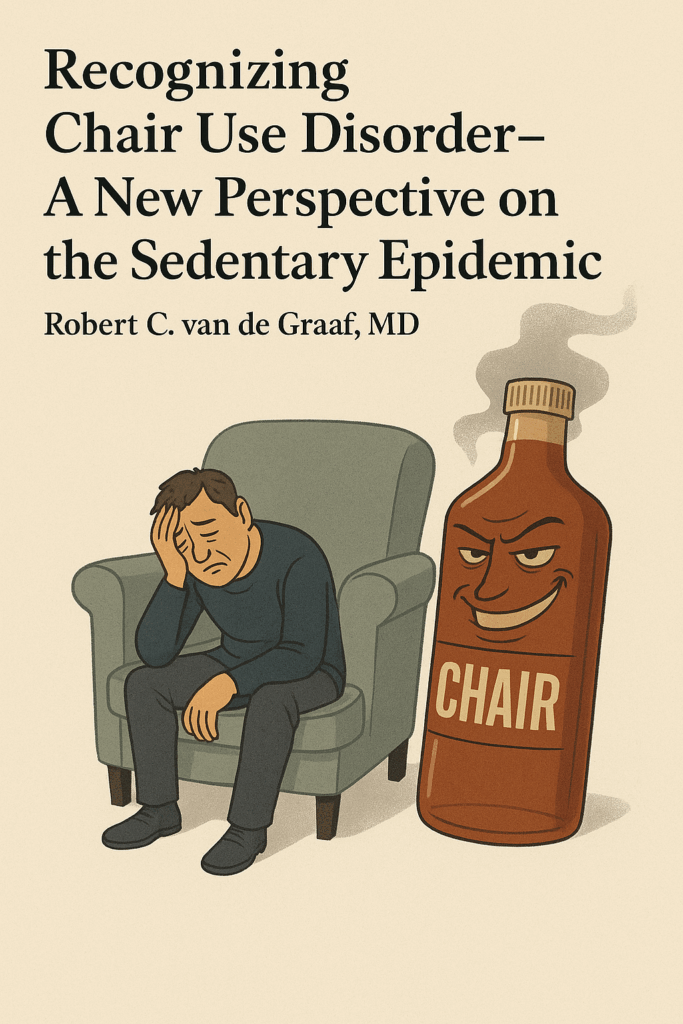
    The concept of Chair Use Disorder (CUD), also known in Dutch as stoornis in het stoelgebruik or in French la maladie de la chaise, emerged organically in my clinical practice as an addiction medicine specialist. Over the past years, I encountered several patients who displayed persistent, compulsive chair use despite negative physical, mental, and social consequences. These patients often showed signs that resembled those seen in substance use disorders: tolerance, withdrawal symptoms, unsuccessful attempts to cut down, and significant functional impairment.

    Prompted by these cases, I initiated a diagnostic and therapeutic approach based on addiction frameworks. The results were both surprising and promising—patients responded positively to cognitive behavioral interventions aimed at reducing total daily chair use. Many experienced classic withdrawal symptoms in the early weeks, including discomfort, irritability, fatigue, and restlessness. This convinced me that the behavior we previously framed simply as “sedentary” might in some cases be better understood—and more effectively treated—as an addiction.

    To raise awareness of this perspective, I first published a policy-oriented piece in Coincide Magazine [van de Graaf, 2022-1], targeting health professionals, prevention coalitions, and policymakers involved in the Dutch National Prevention Agreement (2018). Around the same time, I gave numerous lectures on Chair Use Disorder (CUD), participated in several podcasts, and was interviewed by media. These public engagements helped to disseminate the concept beyond the clinical setting, sparking discussion among healthcare professionals, researchers, and the general public alike.

    This was followed by a short scientific article co-authored with professors Erik Scherder and Leonard Hofstra, published in the Journal of Physical Activity and Health [Van de Graaf, 2022-2], marking the concept’s first step into academic discourse. The idea resonated widely. It was featured in national and international media—including NRC Handelsblad, Radio 1, Belgian and French outlets, The Guardian, BBC, and platforms in South Africa, Denmark and other countries.

    As with any new diagnosis, it takes time before society and science fully embrace it. For now, we are in the agenda-setting phase. While many acknowledge that “sitting is the new smoking,” the focus has been too narrow – promoting standing desks and walking breaks as the only alternatives. But the real issue, as I have argued, is not sitting per se, but our overuse of the comfortable chair, a consumer product designed to offer effortless pleasure at the cost of long-term health. Just like with other addictive products, excessive use may lead to chronic disease and social withdrawal.

    In this context, we present three responses to articles recently published in Nature Scientific Reports (2024) [Van de Graaf, 2025-1], JAMA Network Open (2024), and Sports Medicine and Health Science (2024). Each reaction reflects on a different dimension of sedentary behavior research, challenging the current biomedical framing and advocating for the integration of addiction-based models into our understanding of and responses to this global health issue.

    Together, these reactions aim to broaden the conversation about sedentary behavior by introducing Chair Use Disorder (CUD) as a compelling framework for both clinical care and public health policy.

    References

    Van de Graaf RC (2022). De meest voorkomende verslaving; we zitten er bovenop maar toch zien we hem niet. Coincide Magazine ‘Samen gezond’ (Mei 2022). https://coincide.nl/de-meest-voorkomende-verslaving-we-zitten-er-bovenop-maar-toch-zien-we-hem-niet-robert-van-de-graaf/

    Van de Graaf RC (2022). Van de Graaf RC, Hofstra L, Scherder EJA. Chair use disorder. We should treat excessive chair use as an addiction. J Phys Act Health 2022; 19(7):473. Doi: 10.1123/jpah.2022-0330. https://journals.humankinetics.com/view/journals/jpah/19/7/article-p473.xml

    Van de Graaf RC (2025-1) Van de Graaf RC. Commentary (1) on: “Association between long-term sedentary behavior and depressive symptoms in U.S. adults” – Guo et al., (Nature) Sci Rep 2024. J Health Behav Med Hist 2025-5.

    Selected Media Coverage on Chair Use Disorder

    https://www.nrc.nl/nieuws/2023/08/28/verslavingsarts-robert-van-de-graaf-stoelgebruik-is-een-stoornis-a4172933

    https://www.nporadio1.nl/nieuws/binnenland/28ec7e8e-1c41-4a7c-9f75-feb21d905ed2/verslavingsarts-spreekt-van-nieuwe-pandemie-we-zijn-verslaafd-aan-zitten

    https://www.rtl.nl/nieuws/editienl/artikel/5404735/verslaafd-aan-zitten-robert-de-graaf-zitverslaving

    https://www.bbc.com/reel/video/p0j1883l/champion-sitters-why-the-dutch-sit-too-much

    https://www.theguardian.com/lifeandstyle/2024/mar/17/europes-champion-sitters-even-the-sporty-dutch-are-falling-victim-to-chair-use-disorder?trk=public_post_comment-text

  • Optimizing Work Healthiness with the Work Healthiness ABCDE Method©

    J Health Behav Med Hist 2025-3

    Optimizing Work Healthiness with the Work Healthiness ABCDE Method©

    Robert C. van de Graaf, MD, director

    MEDTCC Institute for Health, Behaviour, Medicine and its History, The Netherlands.

    Introduction

    Work healthiness©, a concept coined by doctor Robert C. van de Graaf in 2020,refers to ‘the ability of individuals and organizations to positively adapt to internal and external changes while maintaining control over their own functioning’. It is a continuous process requiring assessment of the situation and proactive adjustments to sustain performance, engagement, and well-being. This concept aligns with modern concepts such as sustainable employability, work ability, and vitality, emphasizing resilience, adaptability, and self-management.

    Given the persistently high levels of stress-related dysfunction, burnout and sickness absence, enhancing work healthiness at both the organizational and individual levels has never been more critical. In the Netherlands, the sickness absence rate reached 5.4% in Q4 2024, meaning that out of every 1,000 working days, 54 were officially recorded as lost due to illness [CBS, 2025-1]. However, these absences are often not solely the result of medical conditions. In many cases, they arise from broader work-related issues, including an imbalance in job demands, insufficient organizational support, workplace culture surrounding sickness absence, or a lack of individual coping resources.

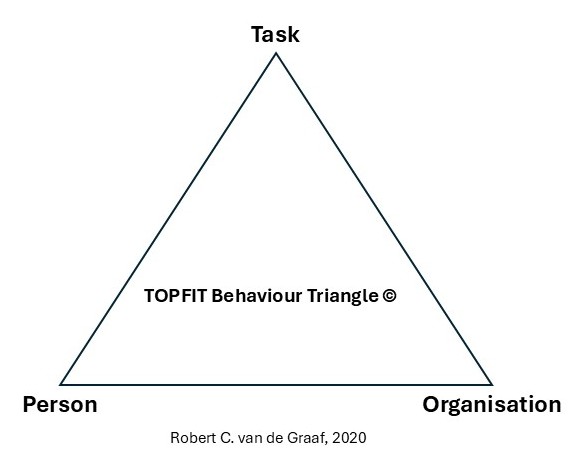
    “A significant portion of absenteeism is likely rooted in misalignment within the TOP-fit triangle© at work [Van de Graaf, 2025-1], where task, organization, and person fail to align in a way that supports sustainable functioning and well-being. This mismatch is not a medical condition but rather a sign of a dysfunctional relationship between the three key elements of the TOP-fit triangle© in the workplace.” When the TOP-fit triangle© is out of balance, it can lead to unnecessary absenteeism, where employees stay home when they might have been able to work under different conditions, or presenteeism, where they continue working despite being unwell, often at reduced productivity. Addressing these misalignments is essential for creating healthier, more resilient and productive workplaces.

    Mental health issues, stress, and burnout have become major contributors to sickness absence In 2023, 7,9% of the sickness absences in the Netherlands were linked to these factors [RIVM, 2025], while 19% of employees reported experiencing burnout symptoms in 2023 [CBS, 2025-2]. These concerning figures underscore that work-related stress is not merely an individual issue but a systemic challenge that demands an organizational response.

    A misalignment within the TOP-fit triangle© – where job demands exceed personal capacities, organizational structures fail to provide adequate support, or employees struggle to maintain control over their work – creates a cycle of chronic stress. Left unaddressed, this imbalance increases the likelihood of frequent or prolonged absences and contributes to declining productivity. To foster a healthier and more sustainable work environment, organizations must take a proactive approach in identifying and correcting these structural misalignments.

    To break this cycle, organizations must actively enhance work healthiness, which is defined as ‘the ability of individuals and organizations to positively adapt to internal and external changes while maintaining control over their own functioning’. By improving the alignment between task, organization, and person, and ensuring a better fit between job demands and available support structures, sickness absence and stress-related functional impairments can be significantly reduced. The Work Healthiness ABCDE Method© provides a structured, proactive approach to recognizing and addressing these mismatches. By shifting from a reactive approach that merely responds to sickness absence toward an active strategy that fosters work healthiness, organizations can create more sustainable, resilient, and productive workplaces, ultimately benefiting both employees and employers.

    The Work Healthiness ABCDE Method©

    The Work Healthiness ABCDE Method© provides a structured approach to systematically addressing these challenges and enhancing work healthiness. Central to the method is the TOP-fit model© with the TOP-fit triangle© [Van de Graaf, 2025-1]. The Work Healthiness ABCDE Method© provides a structured approach to assessing and optimizing work healthiness by analysing the three core components of the TOP-fit triangle©: task, organization, and person [Van de Graaf, 2025-1]. The task refers to the nature and demands of the job, including workload, complexity, and required skills. The organization encompasses the structures, culture, leadership, and resources that support or hinder effective functioning. The person represents the individual’s capabilities, health, motivation, and adaptability. With an optimal work healthiness these three elements can be maintained in balance within the TOP-fit triangle.

    Assessment

    The first step in the Work Healthiness ABCDE Method© is assessment, which involves analysing the three core elements of the TOP-fit triangle©: task, organization, and person. This step requires evaluating job responsibilities and demands, the support and resources provided by the organization, and the employee’s skills, health status, and coping mechanisms. A thorough assessment helps identify potential risks for both health problems and functional impairments, providing a foundation for targeted interventions to improve the situation.

    Table. Work Healthiness ABCDE Method©

    StepDescription
    Assess (A)Analyze the task, organization, and person within the TOP-fit triangle©. Identify risks for health issues and functional impairments to enable targeted interventions.
    Balance (B)Determine if task, organization, and person are well-aligned (‘fit’). Identify mismatches that may cause stress, inefficiency, or health issues, and address them proactively.
    Communicate (C)Discuss assessment findings with stakeholders to foster awareness and shared responsibility. Encourage open dialogue and self-reflection to clarify priorities.
    Develop (D)Implement changes to improve the ‘fit’ in the TOP-fit triangle© by adjusting tasks, support, skills, etc. Aim to restore balance and enhance sustainability.
    Evaluate (E)Evaluate the impact of changes by monitoring satisfaction, performance, and well-being. Maintain successes, reassess needs, and restart the cycle for continuous improvement.

    Balance
    After the assessment, it is essential to determine whether the relationships between the task, organization, and person are well-aligned (‘fit’). Key questions in this step include whether the tasks are suited to the individual’s capabilities, whether the organization provides adequate support for the tasks being performed, and whether the individual can meet the demands of the job without experiencing excessive stress. Identifying mismatches early on can reveal potential risks such as stress, burnout, reduced performance or sickness absence. Addressing these imbalances proactively allows for targeted interventions to improve the situation and prevent future issues.

    Communicate

    Effective communication is essential for translating insights from the assessment and balance evaluation into actionable steps. This phase involves discussing the findings with relevant stakeholders, including supervisors and colleagues, to foster awareness and shared responsibility. Engaging in self-reflection to clarify personal perspectives and priorities is also important. By aligning expectations and collaborating on solutions to address imbalances and risks, open communication reduces stigma around work-related challenges and encourages a culture of continuous improvement.

    Develop

    After raising awareness and engaging in communication, the next step is to actively develop and implement changes that improve the ‘fit’ within the TOP-fit triangle©. This may involve adjusting job tasks to better align with individual capabilities, enhancing organizational support to provide more effective resources, and improving personal skills and coping mechanisms through training, stress management, and well-being initiatives. The goal is to create an actionable plan that reduces risks, restores balance, and promotes a more sustainable and resilient work situation.

    Evaluate
    The final step in the Work Healthiness ABCDE Method© is evaluation, where the effectiveness of implemented changes is measured and further adjustments are made if necessary. This phase involves monitoring improvements in the ‘fit’ of the TOP-fit triangle©, such as job satisfaction, performance, and well-being indicators. Successful changes should be maintained, while areas still needing attention are reassessed. The ABCDE cycle then restarts by revisiting the assessment phase, ensuring ongoing monitoring and adaptation. By continuously measuring, refining, and restarting the cycle, individuals and organizations cultivate a sustainable process that enhances both work productivity and employability.

    Practical Applications and Organizational Perspectives

    The Work Healthiness ABCDE Method© is applicable at both the individual and organizational levels. For individuals, it serves as a self-management tool for monitoring their work, identifying risks and other stressors, and implementing personal strategies for improvement, thereby improving their work healthiness. For organizations, it provides a structured framework for leaders and HR professionals to assess workplace dynamics, enhance employee well-being, and develop targeted interventions to reduce absenteeism and presenteeism, and improve operational success.

    Case Study: Applying the Work Healthiness ABCDE Method©

    A real-world example highlights the effectiveness of this approach. An employee struggled with increasing stress due to a high workload and limited organizational support. Overwhelmed by multiple factors, he lost control of his work situation. To cope, he resumed smoking, consumed excessive coffee during the day, and relied on alcohol in the evenings to relax. The use of substances to cope with stress is common [Van de Graaf, 2025-2]. Eventually, he reported sick and received coaching to support his reintegration and long-term employability.

    Using the Work Healthiness ABCDE Method©, an assessment identified key risks and misalignments within his TOP-fit triangle©. Through discussions with his manager, targeted interventions—such as task redistribution and flexible scheduling—were introduced. Over time, he regained control of his work situation, successfully quit smoking again, significantly reduced coffee intake, and stopped drinking alcohol during the workweek, limiting consumption to moderate levels on weekends.

    A follow-up evaluation confirmed the improvements, making these changes a lasting part of his routine. His overall performance and well-being improved significantly, and he continued applying the Work Healthiness ABCDE Method© to sustain his work healthiness.

    Conclusion

    Work is a dynamic and evolving process that demands ongoing attention and proactive management to minimize the risks of work-related underperformance and health issues. The TOP-fit model© provides a structured way to analyse key factors influencing work healthiness, while the ABCDE method© offers a practical framework for continuous assessment, balance, communicate, develop, and evaluate. Given the persistently high levels of sickness absence and stress-related complaints, improving work healthiness is not optional but necessary. Employees frequently remain fully absent for extended periods, despite the possibility of partial participation. By systematically applying the ABCDE method© within the TOP-fit framework©, individuals and organizations can enhance resilience, adaptability, and sustainable performance, ultimately fostering a healthier, more engaged, and more productive workforce.

    References

    Van de Graaf RC (2025-1)The evolution of a behavioural model: how the triangle shaped my thinking. J Health Behav Med Hist 2025-1. 

    CBS (2025) https://www.cbs.nl/nl-nl/visualisaties/dashboard-arbeidsmarkt/werkenden/ziekteverzuim (2025, March 27th).

    RIVM (2025-1). https://www.rivm.nl/mentale-gezondheid/monitor/gevolgen-mentale-ongezondheid/ziekteverzuimpercentage (2025, March 27th)

    RIVM (2025-2)  https://www.rivm.nl/mentale-gezondheid/monitor/werkenden/burn-out-klachten (2025, March 27th).

    Van de Graaf RC (2025-2). The mutual relationship between work and substance use: the need for ADM policy in organizations. J Health Behav Med Hist 2025-2.

  • The mutual relationship between work and substance use: the need for ADM policy in organizations

    J Health Behav Med Hist 2025-2

    The mutual relationship between work and substance use: the need for ADM policy in organizations

    Robert C. van de Graaf, MD, director

    MEDTCC Institute for Health, Behaviour, Medicine and its History, The Netherlands

    The double-edged sword of substance use in the workplace

    Work and substance use have been intertwined throughout human history [Frone, 2019]. In certain contexts, substances can offer short-term benefits. Alcohol has long facilitated networking and social bonding in corporate settings, breaking down barriers between colleagues and business partners. Stimulants like caffeine, nicotine, amphetamines, or cocaine help employees stay alert and focused during long meetings and tight deadlines. After a stressful day, many turn to substances to unwind and recharge.

    However, this is only one side of the coin. Unchecked substance use can seep into work hours, impairing judgment, slowing reaction times, and increasing the risk of errors and accidents. What begins as an occasional coping mechanism can escalate into problematic use, leading to presenteeism – where employees are physically present but perform well below their potential or absenteeism. The substances that once seemed beneficial become a liability, not only for the individual but for the entire organization.

    How work environments shape substance use

    Many organizations overlook a critical reality: work environments don’t just suffer from substance use – they actively contribute to it. High-pressure environments, tight deadlines, mentally or physically demanding jobs, and job insecurity often drive employees toward alcohol, drugs, or psychoactive medications as coping mechanisms.

    In industries where social drinking is normalized, employees may feel pressured to join in to fit the culture. Night shifts and irregular schedules disrupt natural sleep patterns, leading workers to rely on stimulants to stay awake or depressants to unwind. The availability of substances also plays a role – whether alcohol is served at work events, drugs circulate in high-risk professions, or medication is easily accessible in healthcare facilities, consumption inevitably increases.

    The consequences of ignoring ADM policies

    This dynamic highlights a crucial point: implementing a comprehensive Alcohol, Drugs, and Medication (ADM) policy is not a luxury – it is essential for any organization that values its workforce and operational success.

    Ignoring substance use in the workplace poses serious health and safety risks. Alcohol, drugs and certain medication impair cognitive function, slow reaction times, and increase the risk of workplace accidents or inappropriate behaviour. Employees struggling with substance use are more likely to call in sick, leading to staffing shortages and added strain on colleagues. Even when present, their productivity declines, resulting in costly mistakes and reduced team performance.

    Substance use also disrupts workplace dynamics, creating resentment among coworkers who must compensate for underperforming team members. Moreover, without clear ADM policies, organizations expose themselves to legal and reputational risks. A single preventable accident linked to substance use can be catastrophic for an organization’s credibility.

    Conversely, organizations that foster a healthy and safe workplace culture can significantly reduce the harmful impact of substance use. By implementing proactive ADM policies and creating a supportive work environment, companies can safeguard employee well-being and boost productivity. Strong leadership, clear guidelines, and effective support systems promote healthier coping strategies and help prevent substance related problems.

    Integrating ADM Policy into a Comprehensive Healthy and Safe Consuming Policy (HSCP)

    In this journal, we will take a closer look at the Alcohol, Drugs, and Medication (ADM) policy as a core element of the comprehensive Healthy and Safe Consuming Policy (HSCP). We will explore how ADM policy plays a vital role in preventing substance-related harm in the workplace and how it seamlessly connects with other essential consumption policies, such as smoke (and vape)-free policies, responsible private screen use during work (e.g., online shopping, social media, and gambling), excessive chair use, and unhealthy (junk) food consumption. By highlighting the interconnectedness of these policies within the HSCP framework, we aim to provide organizations with a comprehensive and integrated approach to fostering a healthier and safer work environment.

    References:

    Frone, M. R. (2019). Employee Psychoactive Substance Involvement: Historical Context, Key Findings, and Future Directions. Annual Review of Organizational Psychology and Organizational Behavior, 6, 273–297.

    J Health Behav Med Hist 2025-2

  • The evolution of a behavioural model: how the triangle shaped my thinking

    J Health Behav Med Hist 2025:1-7 PDF

    The evolution of a behavioural model: how the triangle shaped my thinking

    Robert C. van de Graaf, MD, director

    MEDTCC Institute for Health, Behaviour, Medicine and its History, The Netherlands.

    Some ideas arrive suddenly, in a moment of inspiration. Others take years to form, growing through experiences, challenges, and unexpected discoveries. The ‘TOPFIT Behavioural Model’©  and ‘TOPFIT Behaviour Triangle’© belong to the second category. It was not a single breakthrough, but rather a long evolution – shaped by key moments in my upbringing, education, medical career, and personal life.

    A childhood fascination with behaviour and work

    My interest in behavioural dynamics began long before I became a medical doctor. My father was a Human Resources manager, and his work fascinated me. Our home was filled with books on psychology, leadership, and workplace behaviour, and I often found myself flipping through them, curious about what drove people’s actions.

    Even as a child, I questioned why some people thrived at work or in school while others struggled. I wondered how much their environment shaped their success and what role context played in developing talent, whether in sports or in a career. Most of all, I was fascinated by the idea of control – how much influence did people really have over their own habits, choices, and life paths?

    At the time, I didn’t realize it, but these early questions planted the seeds for what would later become my central focus: understanding the dynamic relationships between people, tasks, and their environment.

    The animal within: how nature shapes our behaviour

    Years later, as a medical student and skilled field hockey player, I became acutely aware of how much of our behaviour is automatic. The moment I stepped onto the field, a switch flipped – I didn’t think, I just acted. It wasn’t conscious decision-making but deeply ingrained instinct. Most of what we do follows this pattern: we rely on routines, adapt to groups, and avoid discomfort, even when change is necessary. My conclusion was clear – our nature shapes our behaviour.

    Eager to understand why, I studied the emerging field of (evolutionary) psychology. It confirmed what I had already sensed: human behaviour is largely driven by subconscious processes. The brain operates on two levels – an instinctive, fast “animal brain” that controls most decisions and a slower, rational “human brain” that can override it, but only with effort. Most people, most of the time, rely on their automatic brain.

    I also realized that every behaviour we exhibit at any given moment, in any given context, has more advantages than disadvantages – otherwise, we wouldn’t do it. This is the essence of behavioural psychology. Whether it’s clinging to habits, resisting change, or making seemingly irrational choices, there is always an underlying balance of pros and cons.

    These insights transformed my approach to behaviour change. Rather than relying on facts and persuasion – especially when working with patients struggling with lifestyle-related health issues – I shifted my focus to reshaping (social and physical) environments, starting with my own and recognizing myself as part of my patients’ environment, and vice versa [Van de Graaf, 2022]. When the surroundings support the right choices, behaviour often changes naturally.

    Discovering the triangle: a framework for complexity

    A crucial moment came around 2006 when I was pursuing a career in plastic surgery and working on a PhD about its history. During my research, I came across professor Jacalyn Duffin’s book ‘Lovers and livers, disease concepts in history’ [Duffin, 2005], where she used a triangle to explain the concept of ‘disease.’ That simple yet powerful framework transformed how I saw medicine. It was no longer just about diagnosing and treating conditions – it was about understanding the relationships between individuals, their complaints, and the (medical) environment. Throughout history, diseases have come and gone; they are not fixed entities.

    I started seeing this triangular dynamic everywhere. In plastic surgery – especially in cosmetic procedures – it became clear that we weren’t just responding to medical needs; we were also creating demand with our techniques. Some colleagues developed new methods and then shaped the perception that people needed these treatments. Was that really so different from the alcohol or food industries, which influenced consumer behaviour to fuel their own business models? It made me wonder: are we creating diseases as much as we are treating them?

    That idea – that medical problems don’t just exist but are shaped by their context, including the medical context – stayed with me. And so did the triangle. It became a tool to clarify complex issues, not just in medicine but also in understanding human behaviour, including my own.

    Applying the triangle to an addiction care facility that reeked of smoke

    The next major shift came in 2012 when I left the hospital setting and moved into youth addiction care. At DOK3, a secure juvenile care facility in Groningen in the north of the Netherlands, I was shocked by what I saw. Children as young as ten, who had entered as non-smokers, left as heavy smokers. My colleagues – professionals in addiction care – smoked with them. There was even an in-house tobacco shop where residents could buy cigarettes with the pocket money we gave them.

    It was a paradox: how could a facility designed to treat addiction openly encourage one?

    Determined to break this cycle, I made it my mission to make the facility smoke-free – not just to prevent children from picking up smoking as a result of our own habits, but also to motivate everyone to quit. This decision later laid the foundation for the smoke-free healthcare and the smoke-free generation movements in the Netherlands.

    At DOK3, I saw human behaviour in its rawest form. Both the teenagers and my colleagues acted according to the same fundamental tendencies. Most behaviours were automatic, shaped by habit rather than conscious choice. People followed group norms, even when those norms were harmful. And when confronted with change, they resisted, reacting to discomfort as if it were pain.

    Changing behaviour meant disrupting not just individual habits but also the routines of the group – the “herd” – that had come to rely on those shared patterns. When I introduced smoke-free policies, the resistance was overwhelming. It wasn’t just the teenagers who pushed back; the staff did too. Their reactions mirrored withdrawal symptoms: irritability, defensiveness, and even aggression. The discomfort of breaking the routine was so intense that it became clear how deeply ingrained behaviour really is.

    Most of what we do is not the result of rational decision-making but of automatic processes. People, most of the time, rely on their instinctive brain. Behaviour emerges from routines, group dynamics, and environmental cues.

    The process of making the clinic smoke-free reinforced what I had already learned: behaviour is shaped by three elements – the person, the substance, and the environment. Another triangle. I came across this same concept in Norman Zinberg’s classic book Drug, Set, and Setting [Zinberg, 1984], which became an essential guide in implementing the smoke-free policy. Zinberg’s book, a classic in addiction care and prevention, echoed the same fundamental truth: the drugs and person cannot be seen separated from its context. All three factors shape user behaviour and experience.

    Refining the triangle: the role of relationships

    By 2015, I was no longer just applying the triangle – I was refining and expanding it. To inspire my colleagues in healthcare to follow the example of DOK3, the first completely smoke-free healthcare facility in the Netherlands, I organized the Smoke Out Healthcare (Rook de Zorg Uit) conference in October 2015 in Groningen. It was the first smoke-free health care conference in the Netherlands. There, I met Professor Jaap van der Stel, an addiction historian whom I had invited to give a lecture on the history of smoking in addiction care. During his talk, he highlighted a crucial insight: the quality of the relationships between the three elements – substance, person, and environment – determines how likely someone is to seek treatment. Van der Stel made me understand Zinberg’s message even better. His perspective made me reconsider how relationships between key factors shape behaviour.

    For example, when the connection between alcohol, the person, and their environment is weak -due to strict regulations, social disapproval, or limited availability –  fewer people drink, and those who do are more likely to seek help when needed. But when this connection is strong – such as in a culture where drinking is normalized and alcohol is easily accessible – fewer people even recognize excessive drinking as a problem, allowing consumption to continue unchecked.

    This same triangular relationship could explain why certain unhealthy behaviours – such as smoking, poor diet, or excessive screen time – persist while others fade away. The weaker the bond between a product and its surrounding, the less likely people are to engage in it.

    For years, I applied this model in lectures, scientific publications, and behavioural interventions – not only in my clinical practice but also in helping organizations become smoke-free and in my public health work with the Dutch government. It became the foundation of my professional actions and played a key role in the smoke-free healthcare and smoke-free generation movements. I developed a framework around this concept, which I called the Addiction Triangle© or Lifestyle Triangle ©(Van de Graaf, 2016, 2022), as part of my Sociological Addiction Model ©(Figure below) [Van de Graaf, 2016].

    Although the Sociological Addiction Model© further developed during the years, something about the model still felt incomplete. Like Zinberg and Van der Stel, I had built it around three key elements – person, environment, and substance (or consumer product). While this interaction influenced behaviour, I wanted a model that included behaviour itself. I wasn’t there yet.

    I also wanted to incorporate intrinsic and extrinsic motivation, as well as the role of ability – both internal capacities and competencies and external opportunities. My work as an addiction medicine specialist had shown me how crucial these factors are in shaping behaviour. They needed a clear place in the model. But how?

    Rethinking Behavioural Theories

    At the start of 2019, I set out to develop a new approach to treating smokers within addiction care. I needed a simple yet effective behavioural model – one that could distinguish between individuals who would benefit from smoking cessation coaching and those requiring specialized addiction treatment. This search led me to the work of Professor Robert West, whom I knew personally from the addiction field. His research on Behavior Change Techniques (BCTs), the Behavior Change Wheel, and the COM-B model [West, 2013; Mitchie 2014] became a key reference point in my exploration.

    By chance, while browsing a bookshelf at a consultancy firm, I came across the work of Professor Theo Poiesz [Poiesz, 1999] and discovered the Triad Model [Poiesz, 2014]. This sparked a deeper exploration of various “three-factor” models, further broadening my understanding of behavioural theories.

    Each model on behaviour and behavioural change had its strengths, but none felt entirely complete. Many were designed for specific behaviours or contexts, limiting their broader applicability. Some were effective at the public health level but impractical for one-on-one consultations. No matter how promising they seemed, something always felt missing.

    Even well-established models like COM-B, Triade, and MOA had a fundamental flaw: they treated behaviour as the outcome of three interacting factors but placed motivation solely within the individual, overlooking external influences. This, I realized, was a critical gap. A more comprehensive approach was needed.

    Then came 2020 and COVID-19, and everything changed. My work shifted, my company took a new direction, and my home life and routines were upended. Despite my expertise in behaviour and behavioural change, I struggled to maintain my own performance and well-being. Even my lifestyle habits declined – I couldn’t adapt as well as I had hoped.

    More importantly, the models I had relied on offered little guidance in navigating this period. Like much of the world, I was experiencing stress, but I lacked a structured framework to make sense of it. Beyond simply doing my best, taking my time, accepting uncertainty, and breathing deeply, I had no real strategy. As someone immersed in the science of behavioural change, this realization was both frustrating and eye-opening.

    One day, after a conversation with my father, I found myself reminiscing about how I used to browse his Human Resources books as a child. That’s when I came across FIT-thinking in current HR literature – and suddenly, everything clicked.

    Work behaviour happens within the context of an organization. By reframing behaviours – such as smoking at work – as tasks and viewing the environment as the organization, things became much clearer. The distinction between work and private behaviour wasn’t as rigid as I had assumed. A private environment functions much like an organization – it has people, a culture, a structure, and goals, even if they aren’t always explicitly defined. A family, for example, has an implicit goal: raising children in a healthy way.

    Inspired, I grabbed a marker and drew a simple triangle on the whiteboard in my office. I labeled the three points: behaviour, person, and environment. That was the moment everything started to fall into place. This realization refined my thinking even further. Behaviour – what we do – is not merely a product of several actors and influences but an essential part of the equation itself.

    And so, the TOPFIT Behavioral Model© was born, built around three key actors – T (Task), O (Organization), and P (Person)—with their mutual FIT as the crucial factor. In future articles, I will delve deeper into the details of this model.

    References:

    • Duffin J. Lovers and livers. Disease concepts in history. Toronto: University of Toronto Press 2005.
    • Poiesz TBC. Gedragsmanagement. Waarom mensen zich (niet) gedragen. Wormer Inmerc BV 1999.
    • Poiesz T. Redesigning psychology. In search of the DNA of behavior. Den Haag: Eleven International Publishing 2014.
    • Van de Graaf RC. Smoking, curiosity and value driven personal leadership. Lecture at the Honours Program, University of Groningen, May 10th 2016.
    • Van de Graaf RC, Kuitert M. De rol van de zorgprofessional. In: Cahn W. et al. Leefstijl Psychiatrie. Houten: Bohn Stafleu van Loghum 2022:333-61.
    • West R, Brown J. Theory of addiction, 2nd edition. UK: Wiley Blackwell 2013.
    • Mitchie S, Atkins L, West R. The behaviour change wheel. A guide to designing interventions. Great Britain: Silverback Publishing 2014.
    • Zinberg NE. Drug, Set, and Setting. The basis for controlled intoxicant use. New Haven: Yale University Press 1984.

    J Health Behav Med Hist 2025:1-7 PDF